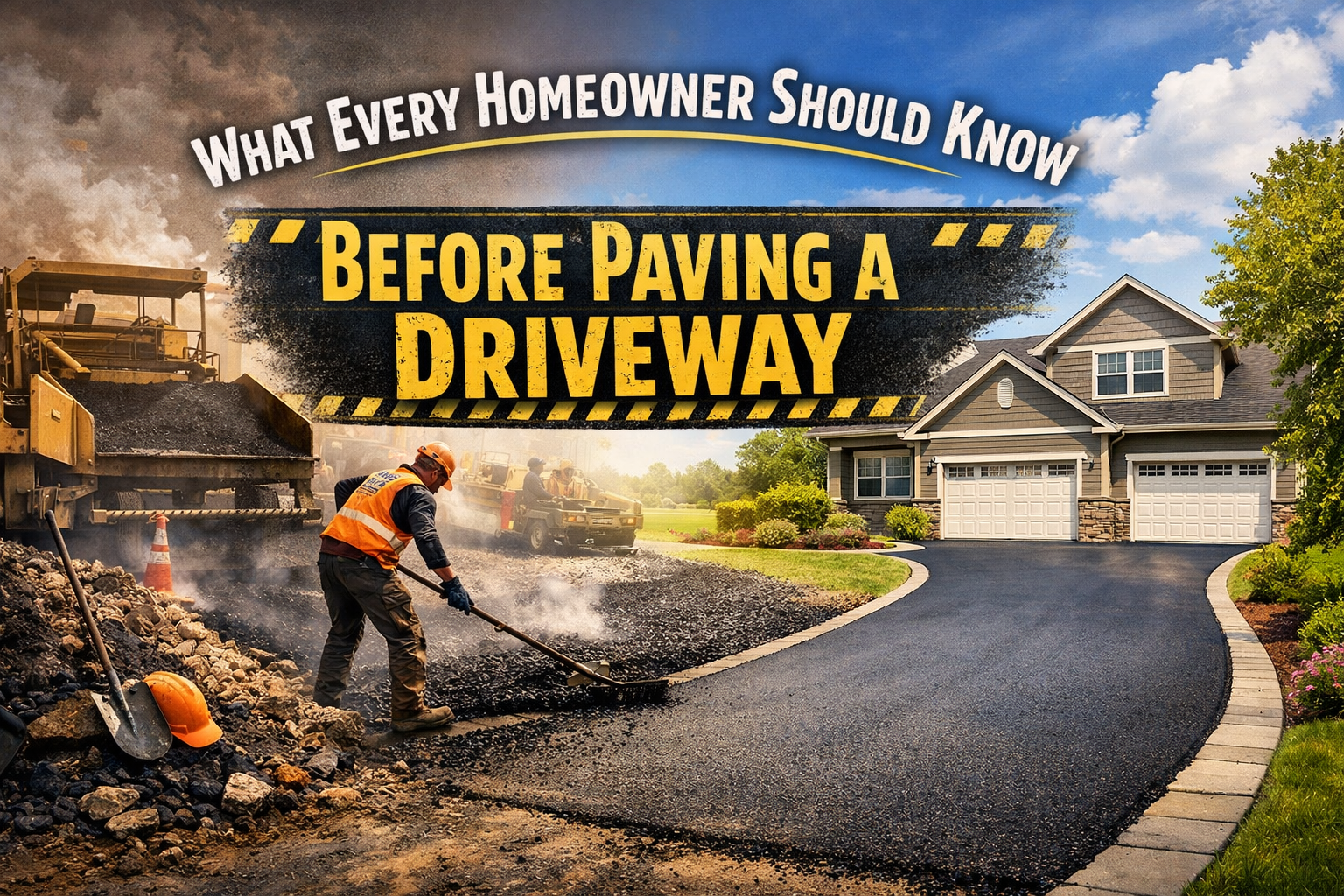
Your driveway is one of the first things people notice about your home. It sets the tone for your property’s curb appeal, affects your daily routine, and plays a bigger role in your home’s value than most people realize. Yet despite its importance, driveway paving is something most homeowners only think about once every couple of decades.
Whether you’re dealing with a crumbling surface, planning a new build, or simply curious about how driveway paving works, this guide covers everything you need to know from material choices and climate considerations to maintenance strategies that can add years to your driveway’s life.
Why Driveway Paving Matters More Than You Think
A paved driveway does far more than give your car a place to sit. It prevents mud, gravel, and debris from being tracked into your home. It improves drainage when properly graded. It creates a clean, defined entrance that instantly elevates the look of your property.
From a real estate perspective, a well-maintained driveway signals to potential buyers that the homeowner takes care of their property. Real estate professionals consistently note that quality hardscape features including driveways support higher asking prices and attract more buyer interest. A cracked, faded, or crumbling driveway does the opposite.
Understanding Your Material Options
Before any paving project begins, the most important decision is choosing the right material. Each option comes with trade-offs in terms of durability, appearance, maintenance requirements, and how well it performs in your specific climate.
Asphalt
Asphalt is one of the most popular driveway materials in the country, and for good reason. It provides a smooth, dark surface that drains rainwater effectively and is relatively straightforward to install. A properly installed asphalt driveway typically lasts between 15 and 30 years, depending on climate, usage, and how well it’s maintained.
Asphalt is petroleum-based, which makes it flexible enough to handle minor ground shifts without cracking a real advantage in regions with expansive soils. However, that same flexibility means it can soften under intense heat, making it vulnerable to impressions from heavy vehicles on hot days.
Concrete
Concrete driveways generally last 20 to 30 years and offer a wide range of aesthetic options including stamped patterns, colored finishes, and decorative borders. Concrete is more rigid than asphalt, which means it handles heavy loads well but is more susceptible to cracking from soil movement or freeze-thaw cycles.
Pavers
Interlocking pavers offer the longest potential lifespan often 30 to 40 years or more. Individual pavers can be replaced without affecting the surrounding surface, making repairs simple and cost-effective. They also come in countless styles, colors, and patterns for maximum design flexibility.
Gravel
Gravel driveways are the most budget-friendly option and work well for rural or country-style properties. The trade-off is higher maintenance gravel needs regular leveling and replenishing, and it doesn’t offer the clean, polished look of a paved surface.
How Climate Affects Your Driveway
One of the most overlooked factors in driveway paving is the local climate. The materials and techniques that work perfectly in one region can fail prematurely in another.
In warmer climates like Southern California, intense UV radiation accelerates the oxidation process in asphalt, gradually making it brittle. Prolonged heat can also soften the surface, leading to ruts and tire impressions. This is why sealcoating is especially critical in sun-heavy regions it acts as a protective barrier against UV damage and helps preserve the surface’s integrity.
In colder climates, the freeze-thaw cycle is the primary enemy. Water seeps into small cracks, freezes and expands, then thaws widening those cracks with each cycle. Left unaddressed, a hairline crack can become a pothole within a single winter season.
Coastal areas introduce additional challenges like salt air and higher humidity, both of which can affect certain materials over time. Understanding your specific climate conditions helps you choose the right material and maintenance schedule from the start.
The Role of Proper Installation
No matter which material you choose, the installation process is where your driveway’s long-term performance is determined. A beautiful surface laid on a poor foundation will fail far sooner than expected.
Base Preparation
The base is the single most important element of any driveway installation. It typically consists of several inches of compacted gravel or crushed stone, carefully graded to ensure proper water runoff. Without a well-prepared base, even premium materials can shift, crack, or sink over time. The minimum slope should generally be around two percent roughly two inches of fall for every ten feet of length to prevent water from pooling on the surface.
Compaction
Proper soil compaction before laying the base material prevents future settling. Shortcuts at this stage are the most common reason driveways fail prematurely. The soil beneath should be compacted to a high density to create a stable, rock-solid foundation.
Edging and Finishing
Quality edging prevents the driveway’s edges from crumbling or breaking down over time. For asphalt driveways, tamping the edges during installation rather than simply rolling them significantly improves long-term durability. For paver driveways, edge restraints keep individual units from shifting or spreading.
When Is the Best Time to Pave?
Timing matters when it comes to driveway paving. Asphalt needs to be installed in moderate temperatures ideally between 60 and 80 degrees Fahrenheit to cure properly. This makes early fall an ideal window in most climates, with stable temperatures and lower humidity.
In Southern California and other warm-climate regions, paving can happen nearly year-round, but it’s best to avoid scheduling installations during peak summer heat. Extremely high temperatures can cause the asphalt to cool too slowly or remain soft for longer than expected. The base must also be completely dry before paving begins waiting at least 24 hours after any rain is a standard best practice.
Maintenance That Extends Your Driveway’s Life
A driveway isn’t a set-it-and-forget-it investment. Regular maintenance is what separates a driveway that lasts 15 years from one that lasts 30.
Sealcoating
For asphalt driveways, sealcoating is the single most effective maintenance step. A quality sealant protects against UV damage, water penetration, oil stains, and general wear. Most experts recommend applying sealcoat every two to five years, depending on climate and traffic levels. The first application should wait until the asphalt has fully cured typically six to twelve months after installation.
Crack Repair
Addressing cracks early is critical. Small surface cracks might seem cosmetic, but they allow water to penetrate the base layer, accelerating deterioration from below. Filling cracks promptly with an appropriate repair compound prevents them from expanding into serious structural problems.
Regular Cleaning
Keeping your driveway clear of debris, leaves, and stains isn’t just about appearance. Organic debris can trap moisture against the surface, and oil or chemical spills can break down asphalt’s petroleum-based binder over time. A simple sweep every few days and an occasional pressure wash go a long way toward preserving the surface.
Drainage Management
Standing water is one of the biggest threats to any driveway surface. If you notice pooling after rain, it may indicate a grading issue or a drainage blockage that needs attention. Proper drainage prevents water from eroding the base material and weakening the foundation.
Signs Your Driveway May Need Attention
Even well-maintained driveways eventually show signs of age. Knowing what to look for helps you address issues before they become expensive problems.
Widespread cracking especially a pattern resembling alligator skin typically indicates sub-base failure that simple patching can’t fix. Potholes signal that water has already eroded material beneath the surface. Loose gravel or aggregate on an asphalt surface means the binder is breaking down. Pooling water after rain suggests drainage issues that will only worsen over time. Significant fading or discoloration points to UV damage and aging.
When repair costs start approaching half the cost of a full replacement, or when you’re making repairs annually, it’s generally more cost-effective to invest in a complete replacement.
How Driveway Paving Adds Value to Your Home
A well-designed driveway replacement can increase a home’s perceived value by improving curb appeal, safety, and functionality. It’s one of those home improvements that pays dividends every single day not just when you sell.
Beyond aesthetics, a properly paved and graded driveway protects your home’s foundation by directing water away from the structure. It reduces tracking of dirt and debris indoors. And for families with children or elderly residents, a smooth, well-maintained surface is simply safer than a cracked or uneven one.
Choosing the Right Approach for Your Property
Every property is different, and the right driveway solution depends on factors like your soil conditions, the slope of your land, how much vehicle traffic it will handle, and your long-term plans for the property.
For homeowners in Orange County and similar Southern California communities, the combination of intense sun exposure, occasional heavy rain, and varied soil conditions means that material selection and proper installation techniques are especially important. Working with a team that understands these regional factors makes all the difference.
If you’re researching options for your property, Driveway Paving Orange County is a great place to start learning about what’s involved in a professional driveway project tailored to the local climate and conditions.
Final Thoughts
Driveway paving is one of those projects where a little knowledge goes a long way. Understanding your material options, how your local climate affects performance, and what proper installation and maintenance look like helps you make smarter decisions whether you’re planning a new installation or simply trying to get more years out of your existing driveway.
The key takeaway? Don’t wait until your driveway is falling apart to start paying attention to it. Regular inspections, timely sealcoating, prompt crack repairs, and good drainage management are the difference between a driveway that serves you well for decades and one that needs replacing far too soon.